Tuesday, February 8, 2011
Italian American Identity
Saturday, January 15, 2011
Eyes on the Prize – Honoring the (Continuous) Struggle for Racial Equality

Friday, January 14, 2011
"What Keeps Greek Identity Through Time"
By Angelike Contis (01/06/2011), The National Herald (www.thenationalherald.com/article/48677)
"The melting pot theory, or the idea that with each generation individuals are less and less "ethnic," never worked for psychologist James Koutrelakos. He also believed that the category of 'White' didn't capture the ethnic experiences of groups like Greek Americans. So three years ago, the retired Hunter College psychologist decided to challenge both concepts in an extensive study of over 700 New York high school and college students. The results of that study confirmed his suspicion: Ethnic identity can continue, strong, across generations, if the right factors are in place.
MELTING POT MYTH
Koutrelakos, 83, a first generation American who grew up in "the Greek village" of Dover, New Hampshire, is passionate about his subject matter. When we met at his art- and book-lined apartment near NYU, one psychological term and historical reference led to another in discussing his new study Ethnic Identity: Group Differences Based on Heritage Education, Language and Religion. The study, currently being reviewed for publication, is his third since retiring in 2004; the International Journal of Psychology published his study on Greek American acculturation that same year.
'The acculturation of immigrants is often viewed as a linear process,' he says, which 'begins in Ellis Island and ends wherever the immigrant ends up.' The assumption, he says, is that one is 'more and more American...and less and less ethnic - in our case, less Greek.' He points to scholars including CUNY Professor Richard D. Alba, who argue that ethnic identity erodes with each generation.
But he wondered, in the case of Greek immigrants, how a group that retained its sense of self for 400 years of Ottoman occupation would act in the New World. "You'd give up your ethnic identity in one generation?" he asked. It seemed wrong.

A new study by psychologist James Koutrelakos, pictured at a Manhattan GABSI event with art therapist Sylvia Mouzourou, reveals what's most important in keeping ethnic identity alive.
NEW YORK ETHNIC IDENTITY PROBED
A lot of legwork was involved as Koutrelakos distributed his 20-minute survey in schools throughout New York City. Over 700 second, third (and plus) generation students, including 257 Greek Americans, filled out the survey, examining how age, sex, generation, heritage education, language and self-esteem were linked to a sense of ethnic identity; the survey was given to minority, mixed ancestry and white students. The 'white' category was divided into 'non specific white' and 'specific white.' The latter group included Greek, Jewish and Armenian American students and made up 45% of the total study. Koutrelakos explains that while race involves how those in power see others, ethnicity is all about how a group sees itself. Race can't be ignored, he feels, due to its role in American history, but ethnic identity cannot be lumped into one non-minority group called "White". He says he focused on Jewish, Greek and Armenian students due to their cultural and historical similarities.
The study used the 12-item Multiethnic Identity Measure (MEIM) to assess student's ethic identity. Included here, were statements like "I have a lot of pride in my ethnic group," with reply choices ranging from 1=Strongly Disagree to 4=Strongly Agree. Students were quizzed too on self esteem, heritage education classwork, linguistic skills and religious service attendance.
HERITAGE EDUCATION, LANGUAGE & RELIGION: KEY FACTORS
The main finding of his study is that heritage education (or courses designed to teach the culture and language of a specific ethnic group), language and religion play decisive roles in keeping ethnic identity alive. Overall, they are associated with a strong sense of ethnic identity. Koutrelakos underlines that when students have some kind of heritage education, 'ethnic identity does not significantly differ (i.e. does not decline ) from second to third generation.'
Furthermore, Greek, Jewish and Armenian Americans scored higher than minorities when it came to sense of ethnic identity. A whopping 86% of this specific white group said their ethnic identity was 'very important,' compared to only 44% of the general white category or 70% of the minority respondents.
'These results point to the important role of education and religion in preserving ethnic identity,' writes Koutrelakos in his report.
GREEK AMERICANS IN STUDY
In the Greek American group, 80% of respondents called themselves 'Greek American,' almost one-fifth, 'Greek,' and less than 1% called themselves 'White, Caucasian, or Orthodox.' Whether in Queens, Brooklyn or Manhattan, the most important factors reinforcing ethnic identity were knowledge of the Greek language and religious participation.
'These are smart kids,' says Koutrelakos, reading a few of the following responses: 'I love this country as well as Greece;' 'I’ve attended Greek school, but I’ve learned more from my mother;” “I am more Greek at home and more American with my school friends.' A few surveys pointed to an even more complex ethnic identity, such as the one that noted: 'I love being from Greece and Peru.' A few expressed confusion, such as: 'I’m very conflicted about my ethnic heritage.'
As a psychologist, Koutrelakos lauded the Greek American respondents' 'cognitive flexibility' and 'identity fluidity' as healthy, noting: 'One has a strong sense that students are comfortable in their own skins.' The survey revealed bicultural adaptation and as scholar Alexander Kitroeff put it 'being ethnic became chic' after the cultural revolution of the 1960s. By contrast, he says, the earlier call for assimilation 'is associated with mental health problems,' with its demand that one identity be replaced by a new American one.
Feeling a part of a group and its institutions is psychologically helpful, he explains: 'When learning Modern Greek, it’s not just an intellectual task. It also involves being associated with a group and asserting Greek identity. Attending church services, while providing a spiritual experience, also gives you a place for socializing with people of your group.... We cannot live alone and be humans.' Koutrelakos distinguishes between healthy ideas of ethnic identity such as pride and curiosity in one's group and unhealthy ones such as fanaticism, a swollen sense of one's group's importance and excessive social rigidity.
AN EARLIER EXPERIENCE OF IDENTITY
In discussing his new study, Koutrelakos often returns to life in the textile mill town of Dover, New Hampshire. That's the place where his immigrant parents ended up, with its vibrant Greek 'village' that sprouted up on a less desirable stretch of river and had a church, school, stores and two coffee houses (for men only). There, everyone referred to him as 'Demetri, yio tou Anastasi' (Demetri, son of Anastasi)." He adds: 'They identified me, told me who I was and where I belonged. There was none of the American business of leaving home to find yourself. You already knew who you were.'
The honor student's first lesson in ethnic intolerance came - ironically enough - through the very local newspaper he delivered while in junior high school in the 1940s. There he read that the city council of nearby Hampton Beach voted that 'no more Greeks or other 'darker Europeans' were to own businesses or buy property' in their town. He also recalls that around that time, 'Some Irish kids called us grease balls.' He winces at the memory, 'That hurt.'
Now he knows his childhood experiences were part of the backlash following the influx of Southern Mediterranean immigrants in the early 1900s, with an accompanying 'fear of Balkanization.'
The backlash didn't hold him back, however, or interfere with his American success story. When 18, Koutrelakos served at General Douglas MacArthur’s Tokyo, Japan headquarters in 1946 and returned to pursue studies, including work at Columbia University in the 1950s. He interned with and was a clinical psychologist at Veteran’s Administration, and later worked as a psychologist at colleges including Julliard and, most extensively, Hunter College. Now he spends much of his time in his Fifth Avenue apartment working on his studies, but also finds time for things like being on the committee of the New York City Greek Film Festival.
FURTHER STUDY NEEDED
The study could lead to further research, with its interesting results, including the association between high academic achievement as well as self esteem with ethnic identity. 'Also noteworthy is the finding that females scored higher than males in ethnic identity on one part of the survey,' suggesting, Koutrelakos says, 'gender differences based on cultural practices.' Though excited about his results, Koutrelakos is quick to point out that they can only be taken so far. For one, the study was limited to New York. Greek Americans who don't have access to heritage education may have different experiences. It was difficult, he adds, to probe the ethnic identity of people of Greek heritage who do not take part in Greek institutions. 'It's hard to get Greeks not in Greek school...or those who don't go to church,' he explained.
But what's clear about his study is that these institutions have a continuing, critical role as ethnic social glue, not to mention offering psychological relief. Koutrelakos adds: 'My study shows that Greeks in the diaspora recreate their traditional educational and religious institutions to preserve heritage and identity.'"
Tuesday, November 16, 2010
An Unpublished Interview about "Contours of White Ethnicity"
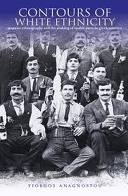
On the occasion of the publication of my book, "Contours of White Ethnicity: Popular Ethnography and the Making of Usable Pasts in Greek America" (Ohio University Press, 2009), I was asked to draft an interview, which was never published. It is not too late, I think, to share it here:
Q: What motivated you to tackle the topic of "white ethnicity" for your first book?
Thursday, October 7, 2010
Post–Racial America?
The Seat Not Taken
By JOHN EDGAR WIDEMAN
Published: October 6, 2010
AT least twice a week I ride Amtrak’s high-speed Acela train from my home in New York City to my teaching job in Providence, R.I. The route passes through a region of the country populated by, statistics tell us, a significant segment of its most educated, affluent, sophisticated and enlightened citizens.
Brian Cronin
Over the last four years, excluding summers, I have conducted a casual sociological experiment in which I am both participant and observer. It’s a survey I began not because I had some specific point to prove by gathering data to support it, but because I couldn’t avoid becoming aware of an obvious, disquieting truth.
Almost invariably, after I have hustled aboard early and occupied one half of a vacant double seat in the usually crowded quiet car, the empty place next to me will remain empty for the entire trip.
I’m a man of color, one of the few on the train and often the only one in the quiet car, and I’ve concluded that color explains a lot about my experience. Unless the car is nearly full, color will determine, even if it doesn’t exactly clarify, why 9 times out of 10 people will shun a free seat if it means sitting beside me.
Giving them and myself the benefit of the doubt, I can rule out excessive body odor or bad breath; a hateful, intimidating scowl; hip-hop clothing; or a hideous deformity as possible objections to my person. Considering also the cost of an Acela ticket, the fact that I display no visible indications of religious preference and, finally, the numerous external signs of middle-class membership I share with the majority of the passengers, color appears to be a sufficient reason for the behavior I have recorded.
Of course, I’m not registering a complaint about the privilege, conferred upon me by color, to enjoy the luxury of an extra seat to myself. I relish the opportunity to spread out, savor the privacy and quiet and work or gaze at the scenic New England woods and coast. It’s a particularly appealing perk if I compare the train to air travel or any other mode of transportation, besides walking or bicycling, for negotiating the mercilessly congested Northeast Corridor. Still, in the year 2010, with an African-descended, brown president in the White House and a nation confidently asserting its passage into a postracial era, it strikes me as odd to ride beside a vacant seat, just about every time I embark on a three-hour journey each way, from home to work and back.
I admit I look forward to the moment when other passengers, searching for a good seat, or any seat at all on the busiest days, stop anxiously prowling the quiet-car aisle, the moment when they have all settled elsewhere, including the ones who willfully blinded themselves to the open seat beside me or were unconvinced of its availability when they passed by. I savor that precise moment when the train sighs and begins to glide away from Penn or Providence Station, and I’m able to say to myself, with relative assurance, that the vacant place beside me is free, free at last, or at least free until the next station. I can relax, prop open my briefcase or rest papers, snacks or my arm in the unoccupied seat.
But the very pleasing moment of anticipation casts a shadow, because I can’t accept the bounty of an extra seat without remembering why it’s empty, without wondering if its emptiness isn’t something quite sad. And quite dangerous, also, if left unexamined. Posters in the train, the station, the subway warn: if you see something, say something.
John Edgar Wideman is a professor of Africana studies and literary arts at Brown and the author, most recently, of “Briefs.”
Originally printed at NYT, www.nytimes.com/2010/10/07/opinion/07Wideman.html?hp
Monday, August 16, 2010
Assimilation ... into What?
Wednesday, August 4, 2010
Racial Profiling is Morally Wrong and Bad for America
A section of the public supports racial profiling as a statistically effective tool to safeguard security and punish illegality. Critics on the other hand, have strongly argued that racial profiling cannot solve the nation’s problems. For example, the fact that Arab Americans and Muslims constitute a greatly diverse population (which includes “whites” and African Americans among others) makes racial profiling unenforceable. Regarding illegal immigration and terrorism, racial profiling is seen as a solution, yet it cannot take the place of systemic solutions to the crisis of porous borders.
Debates about racial profiling as a rational response to terrorism and illegality overlook an acute moral problem. In marking certain groups as a source of threat, racial profiling puts innocent citizens, residents, and immigrants under pervasive scrutiny. As a result it produces a sense of exclusion, alienation, and fear among members of the targeted group. It also diminishes the trust in law enforcement among law-abiding citizens.
In a fundamental sense, racial profiling defines certain Americans of the “wrong look” as not fully American. Or, to put it differently, it puts them on continuous trial. It is a menacing force, causing devastating psychological and physical harm to those targeted. It must be unequivocally rejected as morally wrong. Moreover, it is bad for America.
Feeding popular suspicions toward the targeted groups, racial profiling also involves the public, not only the government. It alerts otherwise well-meaning citizens that certain people who look or dress in particular ways are potential enemies. And it emboldens a race-centered harassment of immigrants and minorities. This exclusionary impulse is far from marginal in the country. The fact that a book advocating a racially homogeneous America–Peter Brimelow’s national bestseller Alien Nation: Common Sense about America’s Immigration Disaster (1995)–enjoyed such great popularity speaks volumes of the power nativist arguments have on the contemporary imagination even in groups that have suffered prejudice in the recent past.
Racial profiling intensifies, therefore, the monitoring, the fearing, and even despising of certain peoples in all aspects of public life. Lawful citizens who fit the profile are seen as not fully American, as aliens in their own neighborhood, schools, or workplace. No wonder innocent Muslim, Arab, or Hispanic Americans experience a profound sense of alienation. Stigmatization functions as a constant reminder of being considered second-class citizens, not fully belonging to the nation. The American decree of equal inclusion irrespectively of ancestry is violated, producing anger and humiliation.
Those who argue that lawful inhabitants of the country have nothing to fear trivialize the ways stigmatization damages the soul and offends one’s civil sensibilities. Individuals singled out because of their appearance offer testimonies of harrowing experiences. As reported in the media, books, as well as formal and informal discussions, they live in a state of siege, being closely watched while flying, subjected to constant suspicion and intrusive searches, showered by ethnic slurs, and being harassed in their own communities. Racial profiling holds a significant population of lawful individuals as hostages. Designating certain Americans as potentially hostile alien, it marks them as lesser Americans.
In addition to psychological horror, physical harm is integral to racial profiling. This is because racial profiling sanctions all kinds of extralegal violence. Having the “wrong look” could be a matter of life or death, particularly during times of crisis. In the months following the 9/11 terrorist attack for instance, over 1,000 incidents of hate crime were reported against individuals who “looked” in the eyes of the vigilantes as Middle Eastern and Muslim. The fact that some of the victims were Sikh, mistakenly thought to be Arabs, sent shock waves across a rainbow spectrum of Americans who looked “south Asian,” including Caribbean Americans. In the aftermath of the disaster many Americans of the “wrong look” feared to go to their work and send their children to school. “Non-whites” are a fair game in the “all seeing” and at the same time blind force of racial profiling.
Numerous examples of Greek immigrants victimized by racial profiling in the past bring this point close to home. In the infamous 1909 Omaha riot as well as the 1918 anti-Greek riots in Toronto, Greek residences and businesses were razed to the ground. No wonder communities scorched by racial profiling drape themselves in the American flag as the ultimate line of defense.
Supporters of racial profiling wrongly assure the public that racial profiling is not random; that it is based on behavioral cues legitimizing suspicions of illegality. This position entirely misses the point that “suspicion” is a socially constituted experience. It is well known that an innocent activity such as riding a bike in the white suburbs may raise suspicion if the biker is of a “certain look or color.” Or consider the horrifying incident in Pirtleville, Arizona, when Border Patrol Agents opened fire on thirteen-year old Rosita Gonzales. Rosita was playing in a tent set in the backyard of their house, when, startled by strange noises she heard, ran toward her home. The Agents fired, misrecognizing her as a fleeing illegal immigrant.
There is yet another moral dimension in racial profiling, an aspect rarely if ever explicitly acknowledged by the public. Racial profiling associates illegal aliens with non-whiteness. This is a false connection, obscuring two interrelated phenomena: The existence of undocumented European immigrants and the preferential treatment they have often received in relation to their Latin American counterparts.
Take the case of the thousands, as many as 30,000, of Irish who overstayed their visas remaining in the United States illegally. This was in the 1980s when, not unlike today, the nation was alarmed over an illegal immigration crisis. Yet those so-called “new Irish” were not subjected to the public hostility that is commonly reserved toward non-white undocumented aliens. The new Irish are “Illegal but not Alien” an article in The New York Times proclaimed. And Boston’s Mayor unflinchingly extended “the welcom[ing] mat,” creating an office to provide legal aid to this group.
I cite this example not to single out the Irish, obviously, but to illustrate that racial profiling creates hierarchies among illegal immigrants. This raises a deeper issue: Racial profiling grants unearned privileges to those who most closely approximate a “white phenotype.” This is morally wrong as it conflates illegality with non-white status. In this arrangement “non-white” Americans are called to keep proving their national belonging, a surveillance to which their white counterparts are for the most part spared.
Let us face it: Racial profiling divides the country into “good white” and potentially “bad brown” Americans.
Supporters of racial profiling would have the public believe that this practice entails an inconvenient interlude in otherwise normal lives. I have shown why this is not the case. Racial profiling forces millions of Americans to painfully adjust their everyday lives to address its pernicious effects. It is deeply harmful, extracting immense human cost. Racial profiling is bad for America.
The nation must collectively invest in strategies to combat terrorism and illegality without resort to racial discrimination.
Wednesday, July 14, 2010
A Greek American Character and Ethnic Whiteness in Film

Saturday, May 15, 2010
Quotation: On the Issue of Racial Profiling (II)
“The most publicized anti-Greek assault took place in 1909 in the city of South Omaha, Nebraska. On the outskirts of the city was a shantytown of several thousand Greek laborers, a number swollen by unemployed railroad workers waiting out the winter. Anti-Greek feeling in South Omaha was already intense owing to the carousing and gambling of the Greeks and, possibly, because many of them were viewed as strikebreakers. The precipitating incident occurred on February 19 when a Greek, John Masourides was stopped by a policeman, while he was with a prostitute. An argument ensued and Masourides killed the officer. The Greeks claimed the policeman was drunk and enraged in seeing a Greek publicly walking with a ‘white’ prostitute, and that Masourides killed in self-defense. In any event, the townspeople were ready to be whipped into a frenzy (‘One drop of American blood is worth all the Greek blood in the world!’) at a mass meeting presided over by local officials. A mob rampaged through the Greek quarter burning most of it to the ground, destroying some thirty-six Greek businesses, and driving all the Greeks from the city. The South Omaha riot was given wide coverage in the Greek press in America and in Greece.”
Friday, May 7, 2010
“My Life in Ruins” Τοο!


Στο προηγούμενο σημείωμά μου αναφέρθηκα στην κινηματογραφική αναπαράσταση λευκών πρωταγωνιστών να πρωτοστατούν στην πολιτιστική σωτηρία του Άλλου το οποίο και εναγκαλίζονται. Δεν θα ήταν υπερβολή, αν και όχι ένα «καθαρό» παράδειγμα, να συμπεριλαμβάναμε σε αυτό το στερέωμα και το «My Life in Ruins» (MLR). Ο λευκός σε αυτήν την περίπτωση είναι ο μεταμοντέρνος Αμερικανός Ζορμπάς που καθοδηγεί την Ελληνοαμερικανίδα στην ανεύρεση της προσωπικής της ευτυχίας· να βρει, πιο συγκεκριμένα, το κέφι/mojo της.
Και δεν υπάρχουν όρια από τη στιγμή που το βρίσκει. Και λάμπει από joy η Χολλιγουντιανή πια Γεωργία/Angelina (Jolie) και από έρωτα τρελλαίνεται με τον clean cut πια εθνικό εραστή, τον «George Clooney του Greece».
Thursday, May 6, 2010
Disparate Genres, a Common Ideology: "Avatar" and "My Big Fat Greek Wedding" (bilingual edition)


What could Avatar and My Big Fat Greek Wedding (MBFGW) possibly have in common?
Nothing, one could safely claim. Fundamental thematic and stylistic disparities distinguish the two films: A science fiction and epic narrative versus a romantic comedy following realist conventions. No relationship whatsoever.
Still, once we approach the films as narratives of encounters between white people and cultural Others it is possible to identify a common ideological thread. In both, the white hero performs a similar function.
In Avatar, as Annalee Newitz notes, the white character not only adopts the customs of the “natives” but also becomes a leader in their fight to preserve their threatened way of life (http://gawker.com/5422666/when-will-white-people-stop-making-movies-like-avatar). Newitz discusses the film in the context of an American filmic tradition–which includes Dances with the Wolves among others–that reverses the historical relationship between whites and non-whites without, however, modifying the power relations between the two. If in the past the white cultural and (military) invasion subjugated non-white people such as the Native American Indians, it is the whites now who emerge as the saviors of the Other. And they do so by assuming a leading position in the Other’s struggle for cultural survival.
As in Avatar, MBFGW also features a leading white character, Ian Miller, who turns native, learning Greek folk dances and adopting ethnic superstitions such as the belief in the curative effect of Windex. And here too the white hero assumes a leading role in safeguarding ethnicity.
MBFGW presents ethnicity as a network of close kinship relations and engaging vibrancy; a cultural resource of particular value to Ian, a priceless oasis of meaning in his empty, as he sees it, life. And ultimately it will be Ian defending this ethnic way of life. When Toula, exhausted by her father’s opposition to her relationship suggests that she and Ian escape it all, it is Ian who averts the severing of the ethnic family, citing its importance. Here, too, the white character functions as the vigilant guardian of a fundamental aspect of the ethnic Other. An ethnic facet oppressed in the past by white society it is now valorized. Wasn’t it Michael Novak who in the early 1970s accused the WASPS of the cultural slaughter of the PIGS (Poles, Italian, Greeks, Slavs)–whom he portrayed as the “network people”?
Almost forty years later the WASP answer strikes back for everyone to see: It is the white society that now sees it as its responsibility to protect ethnicity. This nexus of filmic representations serves to cancel white guilt as it situates whites at the helm of multiculturalism. In this manner the impression is created of American society underwriting the terms of its multicultural direction.
Let us not forget, for instance, that Greek American festivals “choreograph” Greek cultural performances according to mainstream tastes and expectations, according to what the wider public considers acceptable ethnicity:
While certainly an expression of ethnic affirmation,
this practice at the same time
consents to cultural subjugation.
– – There is of course much more to MBFGW to which I will be returning.
–––––––––––––––––––––––––––––––––––––––––––––––––––––––––––––––––––––––––––––––––––
Τι κοινό θα μπορούσαν να έχουν οι ταινίες Avatar και My Big Fat Greek Wedding (MBFGW)?
Καμμία, θα έλεγε άνετα κανείς. Ριζικές μεταξύ τους διαφορές στη θεματική και στο στυλ τις διαφοροποιούν όσο τη μέρα και τη νύχτα. Eπιστημονική φαντασία και επική διάσταση η πρώτη, ρομαντική κωμωδία και ρεαλιστική αναπαράσταση η δεύτερη. Απολύτως καμμία σχέση.
Και όμως, αν τις προσεγγίσουμε σαν αφηγήσεις συνάντησης των λευκών με Άλλες κουλτούρες είναι δυνατόν να διακρίνουμε έναν κοινό ιδεολογικό πυρήνα, κυρίως όσον αφορά την λειτουργία του λευκού ήρωα.
Στο Avatar, όπως σημειώνει η Annalee Newitz, ο λευκός πρωταγωνιστής όχι μόνο υιοθετεί τα ήθη και έθιμα των «ιθαγενών» αλλά ανακηρύσεται και ηγέτης στον αγώνα της διάσωσης του απειλούμενου τρόπου ζωής των (http://gawker.com/5422666/when-will-white-people-stop-making-movies-like-avatar). Η Newitz αναλύει την ταινία στο πλαίσιο μιας Αμερικανικής κινηματογραφικής παράδοσης–που περιλαμβάνει το Dances with Wolves μεταξύ άλλων–που αντιστρέφει την ιστορική σχέση λευκού-μη λευκού χωρίς όμως να μεταβάλλει τις σχέσεις εξουσίας μεταξύ τους. Αν λοιπόν στο παρελθόν η λευκή πολιτιστική (και στρατιωτική) επέλαση ποδοπάτησε μη λευκούς λαούς όπως τους Ινδιάνους, τώρα οι λευκοί αναδεικνύονται οι σωτήρες του Άλλου. Μάλιστα τοποθετούνται σε ηγετική θέση στον αγώνα του τελευταίου για πολιτιστική επιβίωση.
Όπως στο Avatar έτσι και στο My Big Fat Greek Wedding είναι ο λευκός Ιαν Μίλλερ που «ιθαγενοποιείται», και σέρνοντας το καλαματιανό και υιοθετόντας την δοξασία στις θεραπευτικές ιδιότητες του Windex. Και εδώ επίσης ο λευκός ήρωας παίζει ηγετικό ρόλο στην προστασία του εθνοτικού Άλλου.
Το MBFGW παρουσιάζει την εθνοτική ομάδα σαν ένα πλέγμα στενών συγγενικών σχέσεων και σφύζουσας δυναμικής · σαν ένα πολιτισμικό κεφάλαιο πολύτιμο για τον Ίαν, μια ανεκτίμητη όαση νοήματος στην άδεια όπως θεωρεί ζωή του. Και είναι ο Ίαν τελικά αυτός που θα υπερασπίσει τον εθνοτικό τρόπο ζωής. Όταν η Τούλα, εξαντλημένη από την γονική αντίσταση στην σχέση της, προτείνει τον Ιαν να δραπετεύσουν (προτείνει δηλαδή μια ατομιστική λύση), είναι ο αγαπημένος της που την αποτρέπει, τονίζοντας τη σημασία της οικογένειας. Ο λευκός ήρωάς μας λειτουργεί κι εδώ σαν άγρυπνος φρουρός μιας καίριας πολιτιστικής διάστασης του εθνοτικού Άλλου. Κάτι που είχε καταπιεσθεί στο παρελθόν από τους λευκούς τώρα ανακηρύσεται «προστατευόμενο είδος». Ο Michael Novak δεν ήταν που το 1971 κατηγορούσε τους λευκούς προτεστάντες ότι κατακρεούργησαν τους PIGS (Poles, Italian, Greeks, Slavs), τους οποίους παρουσίαζε σαν «network people»;
Σαράντα χρόνια αργότερα παρελαύνει μπροστά στα μάτια μας η λευκή απάντηση: είναι το λευκό τώρα που προσδιορίζεται σαν προστάτης του εθνοτικού. Το πλέγμα των αναπαραστάσεων αυτών ακυρώνει την ενοχή των λευκών καθώς την ίδια στιγμή τοποθετεί τους λευκούς στα ηνία της πολυπολιτισμικής εκστρατείας. Έτσι δημιουργείται η εντύπωση ότι οι πολυπολιτισμικές εκφράσεις στην Αμερικανική κοινωνία εγγράφονται σύμφωνα με τους δικούς της όρους.
Ας μη μας διαφύγει, για παράδειγμα, ότι τα Ελληνοαμερικανικά φεστιβάλ «χορογραφούν» την παρουσίαση της Ελληνικής κουλτούρας με βάση τις δεσπόζουσες προτιμήσεις και προσδοκίες του ευρύτερου κοινού· με βάση του τι γενικά θεωρείται αποδεκτή εθνοτική έκφραση:
Αυτό που βέβαια συνιστά εθνοτική επιβεβαίωση,
αποτελεί επίσης
μια πρακτική που συναινεί
στην πολιτιστική υποταγή.
Saturday, March 20, 2010
On the Question of "Race"
Writing about the early 1900s classification of southeastern European immigrants as "inbetween peoples," historian David Roediger insists on the messiness (his word) of the racial landscape at the time. Roediger emphasizes the need to take into account the vast complexity of the ways in which racial identities were experienced and spoken about, throwing the gauntlet to the academics: "Scholars are no friends of such messiness," he writes.
Similarly, one of the most sophisticated anthropologists currently writing about the construction of white racial identities, John Hartigan Jr., calls scholars of whiteness to move beyond neat models and convenient generalizations to probe instead the ways in which identities are racialized contextually; to pay attention to their fluidity, ambivalence, and situational politics without losing sight of larger social discourses; to examine how cultural factors and regions (even neighborhoods) shape the way we talk and experience race.
Finely tuned ethnography appears to be one of the best tools we have at our disposal to chart this complexity.
I cannot frankly see how we can have a meaningful discussion on the racialization of Greek Americans without taking into account the racialization of European immigrants and their descendants in the U.S.; without, that is, examining the history of the politics of ethnicity and race in American society. And we cannot advance this discussion without knowledge of the latest developments in whiteness studies.
Risking oversimplification, but for the sake of establishing an explicit framework, here is the premises guiding my engagement with the question of "race":
1) I side with the constructivists who view race as a social construction, to only add what is commonly accepted these days: although races are social constructions, they may carry real-and sometimes devastating-effects on individual lives and groups (think of Jim Crow, the Chinese exclusion act, affirmative action, etc). To further complicate things, many individuals experience their identities as real.
2) We live in a racially hierarchical society where approximations to a racial and cultural national ideal carry a number of privileges (lack of discrimination, high potential to marry within the dominant group, inclusion into "true" national belonging, etc).
3) We need to make a firm distinction between dominant racial categories (the ethnoracial order) and the ways in which individuals negotiate their place in that order. In other words we can speak of racial location as a) a widely shared social fact/construction (identities for example are racially ascribed in the U.S., the offspring of a WASP and an African American is most likely to be classified as "black") and b) a subjective experience of identity. In the situation where individuals challenge official racial categories is useful to remember that personal identity can be profoundly political. How individuals view their identities vis-a-vis their assignment into dominant racial classifications varies, of course, requiring ethnographic research to untangle this question in all its complexity. Conversely, how and why the dominant society assigns an ethnoracial location to a specific group may vary along a number of variables, needing careful contextualization. There are too many examples in American history about the whitening of the immigrant working class to convince me that class does not necessarily determine racial status, though class may factor-in in ethnoracial assignments, including the prospect of being included in whiteness (see Fairchild).
4) White ethnics (including Greek Americans) have been elevated as the poster ethnics of multiculturalism by conservative commentators and academics (among others); their narrative of bootstrap mobility (what Sylvia R. Lazos calls "the white ethnic immigrant narrative"), in particular, is utilized for all sorts of explicit and implicit undermining of racial minorities, particularly African Americans (think of who is prefacing William Spanos's story of becoming a multimillionaire; think of constructions of "good immigrant families" vs. "pathological black families").
I have an interest in whiteness because it represents an ideology (re)producing racial hierarchies. As such I maintain that it must be relentlessly critiqued; hence I insist on the analytical utility of examining racialization.
I am not interested on framing the question as "who is" or "who is not–white," a question that invariably leads to reductive positions, dangerous biologisms, etc. I prefer to examine how whiteness is constructed, who does the defining, why, and for what purpose (though the privileges associated with appearing white is an important issue). It is of outmost importance to me to examine how individuals or groups reproduce or challenge whiteness. And I am also vested in the question of what kind of cultural and political work do claims to a white status or disavowal from it accomplish.
In this context it is worth keeping in mind that whiteness is continuously morphing into something else; it is modified in response to political and social developments, even through a language that lacks explicit references to race (hence its particular power). Matthew Frye Jacobson identifies, for instance, cases where disavowals of a white identity among European ethnics in the U.S. ("I am not a white," "I am an ethnic") may be far from innocent. When ethnics who are perceived as white by the wider population disassociate themselves from their white racial location they implicitly deny the privileges associated with this racial classification. In this manner, they render all these structures that perpetuate the (hierarchical) racial order invisible with all the political implications that this position implies.
Color-blindness is a lauded ideal, but the difficult question is how to bring about racial justice in a society already structured around racial hierarchies.