Showing posts with label Greek America. Show all posts

Saturday, December 21, 2013

Greek Americans and African Americans in Conflict and Solidarity


Review of George Pelecanos'
The Turnaround 

I was well into my first reading of “The Turnaround” last November when a newspaper headline demanded my attention. An Ecuadorian immigrant was brutally killed in Long Island – a hate crime. Haunted by the atrocity, I pulled away from the novel for reasons that I will explain below. Once again, one of the nation’s most harrowing dramas had played itself out. Teenagers, commonly male, banding together to hunt and hurt immigrants or minorities. Young men, most often white, bonding to harm those not conforming to racial or sexual norms. It is at night when this ritual of terror occurs. The pursuit takes place with some regularity, cruising neighborhoods in search for a target. Alcohol or drugs may be involved, conspiring with the darkness of the hour to unleash racism in its full horror. The moment when hate flashes – in the razor-sharpness of a denigrating slur, the stain of a stabbing knife, or the finality of a gunshot – the human cost is insufferable, and the scars inflicted upon those involved may take a lifetime to heal.


I felt compelled to return to the novel later that day. “The Turnaround,” you see, fictionalizes a real-life incident somewhat comparable with the one in Long Island, this time a 1972 lethal confrontation between white and African American teenagers. In Pelecanos’ fictional telling the drama takes place in an all-black community, Heathrow Heights, in Washington, D.C. Two out of the three youth who intrude into the secluded neighborhood are Greek American. Billy Cachoris is at the wheel, while Alex Pappas coils at the back, an unwilling participant. Billy and the third passenger, Pete Whitten, insult a group of local teens, inciting violent retaliation in turn. This racial incident leaves Billy shot dead, and condemns James Monroe to lengthy imprisonment, sentenced for manslaughter. Pete manages to flee the scene unharmed. Alex survives the melee, his face permanently disfigured by Charles Baker who is convicted for assault. Raymond Monroe, James’ brother, is also involved.

An act of racial domination turns deadly, but the line between the perpetrators and the victims is blurred. In the ensuing trial the court punishes the black teens who exercised physical violence, and absolves the white teens who inflicted symbolic cruelty. It can be said that the novel begins when the official investigation closes and the trial concludes. Once it establishes the specifics of the incident, the plot fast forwards more than three decades later to address how the participants, now in middle age, fare in life. The novel asks, how do human beings attend to the emotional wounds in the aftermath of violence? How do the physical survivors cope after the bloodstain in the cement has washed away, but the strain in the psyche still refuses to go away? Where can justice be found if, according to the narrator, the justice system fails to administer full justice? That November evening, when literature and reality locked in a haunting unison for me, it was to “The Turnaround” that I turned, grappling for answers.

The novel is the second installment in a $1.5 million three-book contract, a lucrative deal that underlines its author’s spectacular rise in the literary marketplace since his first appearance in the trade, in 1992. Recognized as a prominent American mystery and detective writer, and a noted television scriptwriter, Pelecanos employs fiction to critique the class and racial divide in American society. He also examines social definitions of manhood, father-son relationships, and relations between white ethnics and racial minorities. His work has attracted the attention of both highbrow and popular media, including The New Yorker, The Washington Post, The New York Times, Entertainment Weekly, and Your Flesh Quarterly, not to mention newspapers and magazines in Greek America and Greece.

“The Turnaround” retains its author’s interest in crime fiction. It features an investigation of sorts, an amateur one by Alex Pappas, which eventually solves a puzzle surrounding the killing. But the book moves beyond the conventions of the genre of detective novel. It is ultimately preoccupied with the causes of racism, the consequences of hate crime, and the possibility of inter-racial redemption.

A Washington D.C.-based writer, Pelecanos is known for illuminating those parts of the city that lay beyond a tourist’s itinerary, places of crime, despairing poverty or working class endurance. Similarly in “The Turnaround,” the sociology and the history of Heathrow Heights is critical to the story. Originally a community of relocated former slaves, Heathrow Heights strives for a modicum of civic pride under layers of abandonment, racism and scarcity. It is a place under siege, assaulted by the neglect of city officials and absentee landlords during daytime, and by racist intruders at nighttime. “To some of the middle- and working-class white teenagers of the surrounding area, who learned insecurity from their fathers,” the narrator lets out, “Heathrow Heights was the subject of ridicule, slurs, and pranks. They called it ‘Negro Heights.’” The place is devalued, and its residents face class exploitation and racial discrimination. “Calling my mother a nigger after she’s been on her feet all day, wearing that cleaning uniform of hers,” James Monroe despairs over her dual domination. “She who has never judged anyone.”

It is not unusual for the public to refer to this kind of places as ghettoes infested with social pathologies, and to blame dysfunctional families and resident passivity for inner city plight. Pelecanos refuses to succumb to this popular mythology. He is too sociologically alert, too sensitive to the complexities of race and class to allow his fiction to function as an incubator of racial stereotypes.

His answer is to portray Heathrow Heights as a diverse place, and its residents as human beings capable of both lofty achievement and petty failure. Individuals may toil to improve their lives and sacrifice themselves for others, but may also collapse under the weight of hopelessness. Ernest Monroe for instance, a family man, takes pride in his work as a bus mechanic, serving as the role model for his son James. A gas station attendant, James emulates his father’s work ethic, and aspires for middle class respectability, his ambition only to expire in the aftermath of the racial incident. Charles Baker, in contrast, the one who scars Alex Pappas’ face for life, finds himself engulfed in resentment and violence. His masculine toughness is displayed against a background of family disintegration – father’s absence and mother’s alcoholism – and the trauma of sexual molestation.

Pete, Billy, and Alex also represent different worlds. Pete, a son of a successful lawyer enjoys great class privileges, groomed for an elite college and eventually a lucrative career. To the consternation of his father he associates with ethnic peers, considering them, however, his social inferiors. In contrast, the social ambition of Billy, the son of a car salesman, and Alex, son of a diner owner, is rather limited; they are both mediocre students. But a vast gap separates them. Billy shares Pete’s condescension toward Alex. And they fundamentally differ in their racial attitudes. Billy is taught by his father to despise black people, to be afraid of them; Alex, who works at his father’s diner with an all-black crew, learns to respect them.

Despite their differences, however, Pete, Billy and Alex share an important asset. The dominant society does not judge them by the color of their skin; race does not interfere in their everyday realities. This is unlike the experience of James Monroe when he steps outside the boundaries of Heathrow Heights in search for work. As a gas station attendant, the prejudice of blacks as unreliable workers places him on a daily trial, a disadvantage he compensates for to his own detriment: “never calling in sick, even when he was sick.”

The racial divide catapults the teenagers into violent collision. Their worlds clash because their worlds are arranged hierarchically. Insulting Heathrow Heights becomes a rite of passage where white teenagers learn to exercise a sense of social and racial superiority. Humiliating the locals serves Pete as yet another occasion to assert his dominant social position. And for Billy racial abuse offers a convenient venue to assert masculine bravado.

“The Turnaround” meanders through worlds of petty crime, vicious violence and family dissolution. It offers glimpses of hypocrisy and self-interested calculation among the wealthy; hedonism among nouveau rich drug dealers; and quiet despair or angry restlessness among the underprivileged. Devoid of authenticity and meaning, these worlds spin in moral void. In juxtaposition to this vacuum, the novel offers a working- and middle-class ethic defined by hard work, care for family, immense self-sacrifice, fairness to employees, pride in professional work, and decency in social conduct. These values crosscut the racial divide, as both the Pappas and the Monroe families possess them.

The novel works as a morality tale, detailing how both families strive to keep at bay the external forces that threaten their moral fabric. But this world is fundamentally threatened by yet another force, an internal one: the racial incident that set Alex against the Monroe brothers in the past continues to divide and torment these fundamentally decent people. To overcome this racial divide a redemptive solution is necessary, a closure.

“The Turnaround” offers no in-depth exploration of the inner lives of the characters in the aftermath of the incident. Instead, the characters function as social types, standing for different resolutions to the injuries of the past. Charles Baker is consumed by rage, seeking retaliation through blackmail. In contrast, Raymond looks for reconciliation through mutual trust, an attitude that seems to also console James. The narrator merely states the posture of Pete Whitten, who pursues a successful career unaffected by the incident, still blind to the humanity of the Monroe brothers. On the contrary, Alex builds a relation of trust with Raymond, acknowledging his culpability in the incident. The narrator leaves no doubt as to Alex’s regret: “Alex could have demanded that Billy stop the car. He knew that what they were about to do was wrong. He’d let it happen. Because of his inaction, many lives had been broken.”

In the figure of Alex, the author construes a Greek American hero who refuses to forget inter-racial conflict in the past and who initiates action to restore injustice in the present. He is portrayed as a dreamer, who invests in solidarity between Greek Americans and African Americans.

“The Turnaround” navigates an uncharted terrain in Greek American history, doing so from a unique vantage point. Instead of focusing on ethnicity alone, it concentrates on race relations. It thus demonstrates that in addition to ethnicity, racial issues also shape Greek American lives. In this respect, it rings a bell for artists, researchers, and educators. It signals that cultural and historical renderings of Greek America will remain one-sided unless one situates Greek America in the wider landscape of U.S. racial relations. In other words, the novel cautions against speaking about ethnicity as if ethnicity is a self-contained entity insulated from wider national issues. And race, Pelecanos reminds us, has been such an issue, a harrowing one.

One wishes however, that “The Turnaround” probed deeper into the race-issues that it raises. One is struck, for example, by how sparingly its characters reflect on racial prejudice, a process that so decisively stains their lives. Whatever little Alex and Raymond let out on how racism infiltrates lives is simplistic, inchoate. Even Alex, the only character drawn to reading shows no interest in probing the topic. When he is called by Raymond to account for the incident, Alex’s explanation is offensively timid; and his defense of Billy rings as unconvincing, a cliché: “I really believe that [Billy] would have turned out fine.” But, really, how can we tell?

Furthermore, the novel is shy in addressing the multifaceted ways in which race may still be an issue in the multicultural present. For socially underprivileged African Americans such as Charles and yet another black character, Deon, race matters; stepping outside their circles and into the world of expensive establishments and stores is an uncomfortable reminder of their social and racial marginality. But what about Raymond? Because “The Turnaround” does not chart his transition from inner city to middle class respectability it is as if his racial identity and underprivileged background ceased to be a factor in the aftermath of the incident. Does the novel imply that race no longer matters in the lives of educated, middle-class blacks such as Raymond, particularly those who have escaped inner city? If so, a more upfront treatment would have been necessary to engage with this highly contested political issue.

Last but not least, a related question: Alex and Raymond find themselves connected in what seems an equal relationship. Championing hard work, enjoying meaningful relationships, building on the possibility of redemption and healing the wounds of the past, both enter middle life contently, contemplating the potential for further fulfillment. But there is an economical asymmetry between the two. Unlike Raymond, Alex owns commercial property. It is this asset that affords James an opportunity to set up his own auto-repair business in partnership with Alex, making possible inter-racial redemption. The novel acknowledges the economic asymmetry between Alex and Raymond but abstains from exploring it head-on. Was race a factor in this inequality? Historians argue that working- and middle-class white ethnics were afforded far greater opportunities than their African American counterparts. As a work concerned with the effects of the racial past in the present, “The Turnaround” owes a more substantive look on how Alex’s past positions him as economically superior to Raymond. One only hopes that Pelecanos, a writer so much invested in exploring the racial divide, will tackle these delicate issues in future work.

Yiorgos Anagnostou


Originally printed in The National Herald, Vol. 12 (611), June 27, 2009:7.


Saturday, August 17, 2013

Zorba doesn't Live Here Any More – The Creation of An American Zorba


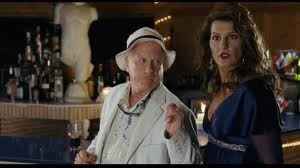
For the last year or so, I have been working on an article-length analysis of the film My Life in Ruins. I am interested in the ways in which this piece of popular culture draws from Hollywood genres, Western, and Greek narratives of identity to construct national belonging for the diaspora. In other words, this is a transnational analysis of the making of a diaspora subject.

During the analysis I realized that the film is as much interested in constructing diaspora as it is in projecting an image of positive American (white male) identity. This latter concern is necessary for ideological purposes. Because the narrative tells the story of heroine who is an unhappy American ethnic, and who eventually turns down an offer for an academic career in the U.S. (having found a sense of belonging in Greece), the film implicitly interrogates the United States, albeit vaguely, as an anomic society. Thus the image of Irv (Richard Dreyfuss) as a fulfilled individual (professionally and maritally) serves the following narrative function: it restores the idea of the U.S. as a place where one can find happiness. In fact, a close analysis shows that the film does something more than this. Here is my analysis, building on some initial thoughts I posted in this blog almost three years ago, http://immigrations-ethnicities-racial.blogspot.com/2010/05/my-life-in-ruins.html (in Greek): 

The film neutralizes its implicit critique of the U.S. when it attaches a host of affirmative attributes to male whiteness. The figure of Irv delivers a template of desirable masculinity: wise, passionate, creative, playful, loving, tender, sensitive, fulfilled, and, as an unattached male, yes, open to sexual dalliances. This construction works relationally in a series of hierarchies, of which I have already identified the first: The gendered and classed pair American-male-professional/ American-ethnic-female-scholar corresponds to the contrast fulfilled body/closed off body. The second hierarchy builds on a reversal, demythologizing the global icon of Greek national identity, namely the figure of Zorba the Greek (1). It juxtaposes white masculinity with this celebrated portrayal of Greek manhood along the plane civilization/savagery to proceed with the metonymic devaluation of Neohellenism. To explore this latter duality, my discussion moves from the film’s tongue-in-cheeck critique of American society to its voluble indictment of, in fact orientalist gaze on modern Greece. 

The heroine’s interaction with the crude receptionist serves as a pretext for this critique. A male of savage sexuality (exchanging postage for sex) and vulgar manners, this character does not simply serve as a cultural type to focus a feminist and cultural critique. The figure stands metonymically for generalized national dysfunction. Significantly, this is someone absorbed by televised images of Zorba the Greek, transfixed by and bodily emulating the famous dancing scene. Heralded as an icon of modern Greek identity, Zorba could be read as a character who refuses to be subdued in the face of life’s adversity and loss. The lewd receptionist’s identification with Zorba stains the legendary male archetype of Greekness with pathological masculinity. In her indictment, the heroine reads Zorba in a literalist manner – the man dances in response to loss (not in spite of loss) – to condemn this image as a sign of a dysfunctional society: The country does not work (2). Once more, the encounter between Greek America and the homeland perpetuates the Orientalist image of Greece as a place engulfed in irrational abandon and unregulated passion. Rationality and agency is absent when the answer to failure is dance.

As an essential Greek male archetype, Zorba is bankrupt, in need of reconstruction. One alternative is the romantic Greek native, “Poupi” Kakkas (Alexis Georgoulis), who falls in love with the heroine. The other is Irv, who restores meaning to whiteness against vacuous identity. My Life in Ruins quotes scenes from Zorba the Greek with the purpose of reversing the hierarchy embedded in the latter between the emotionally freed Greek native (Zorba) and the psychologically oppressed, westernized male (Basil/Alan Bates). The figure of Irv resoundingly testifies that the west does not repress.

The text undermines the exalted indigeneity of Greek masculinity by rewriting Irv as a (reconstructed) Zorba away from the national soil. The global icon of the ideal male is deterritorialized. The rationalized meaning of dance as the expression of a positive outcome (recall the occasion of the tourists dancing in the newly air-conditioned bus) is restored. As the credits fall, Irv gleams while watching alienated Basil urging Zorba, “teach me how to dance.” It is him, after all, who has been instrumental in mentoring Georgia’s rehabilitation of self. The Greek Zorba has been dethroned. An American male has taken the role of a caring yet paternalistic mentor of gendered ethnicity. Male whiteness is not merely restored; its authority is also asserted as a cultural template for American ethnic women to emulate, including, as I discuss in the forthcoming article, the narration of heritage. The feminist critique in this narrative thread degenerates to all-encompassing Orientalism and the cultural domination it reproduces.


Notes


1. Peter Bien (2000) notes the inconsistencies between the literary and filmic Zorba. “The whole point of the book’s end is that the boss is liberated as an artist… He does not become like Zorba (as the film would have us believe)” (164).    

2. The Zorba image is contested in Greek America. My Life in Ruins registers the narrative of discomfort, aptly captured in Dan Georgakas’ personal response: Zorba the Greek “projected the Greek male as an instinctive brute, lovable at times, but totally incompetent and irresponsible” (236). Charles Moskos (1989) draws an unambiguous boundary between that image and U.S. Greek immigrants: “They had their share of rascals and more than their share of infighting, but Zorbas they were not” (185).

References Cited

Bien, Peter. 2000. “Nikos Kazantzakis’s Novels on Film.” Journal of Modern Greek Studies, 18 (1): 161–169.

Georgakas, Dan. 2006. My Detroit: Growing Up Greek and American in Motor City. New York City: Pella Publishing.

Moskos, Charles. 1990. Greek Americans: Struggle and Success. New Brunswick, NJ: Transaction. (Originally published in 1980 by Prentice-Hall)


Monday, August 12, 2013

The State of Italian American Studies


A discussion about the place of Italian American Studies in the University raises issues, and presents a series of ideas and arguments
of interest to all of us in transnational modern Greek Studies:


Tuesday, February 28, 2012

Greek American Radicals – The Untold Story


The historical documentary  Greek American Radicals - the untold story  presents  a forgotten page of Greek immigrant experience in America: the role of immigrants in the radical labor movement in the United States and the journey of the Greek American left from the early 20th century until the years of McCarthyism.
Texts, letters, songs, newspapers, photographs, and unique archival footage from film recordings of the American labor movement substantiate the narrative.  Personal testimonies and interviews recreate the atmosphere of the Great Depression of 1929, the struggles of trade unions, the presence of immigrants as volunteers in the trenches of the Spanish civil war, the political persecution of McCarthyism and the deportations of the protagonists.  
The unknown story of Greek American radicalism as part of the political and social developments in the United States highlights the history of those who lived on the other side  of the "American dream" of success and political conservatism.


Friday, January 20, 2012

Greek-American Music

Spyros Soukis «Η Μάγισσα της Αραπιάς»

For more on this musician see Angelike Kontis' piece in the National Herald:


Johnny Otis (born Ioannis Alexander Veliotes) (1921-2012)


For those interested in the life and work of Johnny Otis the scholarship of George Lipsitz is exemplary:

Lipsitz, George. 1993. "Introduction. Creating Dangerously: The Blues Life of Johnny Otis." In Upside Your Head! Rhythm and Blues on Central Avenue. xvii–xxxv. Wesleyan University Press.

Lipsitz, George. 2007. "How Johnny Veliotis Became Johnny Otis." Journal of the Hellenic Diaspora. Vol. 33(1&2): 81–104.

Lipsitz, George. 2010. Midnight at the Barrelhouse: The Johnny Otis Story. University of Minnesota Press.

There is also Johnny Otis' autobiography (Upside Your Head! Rhythm and Blues on Central Avenue. Wesleyan University Press, 1993). To honor Otis's life-long anti-racist activism I share the following passage, a commentary about marrying his high school sweet heart Phyllis Walker, of Afro-Samoan ancestry (
in Reno, Nevada on May 2, 1941):

[California anti-miscegenation law prevented them from marrying in California, but also in Nevada where] “we got around the problem by the same apartheid mentality in Reno” (59)

“Our parents could have the marriage annulled if they chose to [the couple were both underage]. My mother chose to. She sent my father to Reno with specific instructions to break us legally. But Pop had different ideas.
The first thing he did when he saw Phyllis was to take her in his arms and hug her and kiss her.
‘Your mother sent me to annul the marriage, but I came to meet my new daughter,’ he said in Greek, with tears in his eyes.
‘And besides, I don’t want to get God on my case.’
I never loved that old man more than I did at that moment” (59).


Monday, December 12, 2011

"Who's Afraid of the Greek Diaspora?" An Exchange

What is the place of the Greek diaspora in Greece's political life? Two points of view, one by the editor of the National Herald (TNH) and the other by a reader, take up the question from different angles:

1) By A.H. Diamataris, Editor, the National Herald, NY:

Ted Spyropoulos, U.S. Regional Coordinator of the World Council of Hellenes Abroad (SAE) wrote an article in this past weekend’s Greek edition of TNH entitled “Ομογένεια, η μεγάλη απούσα” (The Greek Diaspora is the Big Absentee) that deserves special attention.

In his article, Mr. Spyropoulos, a Greek-American with progressive ideas, along with lots of successful undertakings to show for himself – including some of the most important initiatives in recent decades regarding our Community issues – touches upon important issues in the relationship between the Greek American Community and the Greek homeland.

Among other things, he expresses his disappointment over the fact that the Greek Diaspora has not been utilized, and he questions why “the political leadership in Greece has not put the question of where the Greek Diaspora stands during this critical juncture in the country's history to the Greek Parliament.”

He adds that “it should be understood that neither the Greek American Community nor the Greek state need to dominate one another. On the contrary, both sides would benefit from mutual support, coordination, and cooperation. It is time that we overcome the national division between ‘us and them’ and start operating with a collective vision.”

Mr. Spyropoulos’ three main points are absolutely correct, and all share the common indisputable fact that Greece, and to a lesser extent Cyprus, never wanted to utilize the Hellenic Diaspora in any essential way. On some occasions, they were compelled to recognize certain personages (i.e., Archbishop Iakovos), because their influence on public opinion was simply so great that they could not do otherwise. They wanted to promote their policies to the Diaspora in certain extraordinary situations, but they never dared to make this cooperation official and they never “coordinated” with the Diaspora. They never wanted to recognize it as an official, essential interlocutor.

And the reason for this reluctance to utilize the Diaspora and give it an official role is simple: they fear it. Granting the Diaspora an official role and naming Greeks abroad to important government posts, i.e. prime minister, president of the republic, cabinet ministries, etc. represents a threat for the majority of the politicians operating inside Greece. They fear that utilizing Greeks of the Diaspora would open the floodgates and usher in healthy forces aimed at cleaning up the country, which would mean that the politicians back in Greece would lose their ability to exert political influence (in the form of corruption) because of the selflessness of Greeks abroad, which has been cultivated by the environments in which they live. Simply put, it would mess up their entire operation.

That is why even the few members of the Diaspora who have been given secondary positions, are, with few exceptions, examples of Greeks abroad to be avoided, and share a very similar mentality with the politicians inside Greece.

A similar example can be found in the attempts that some Greek businessmen are making to get the country to return to the drachma. They simply want to control the national currency, like they did back in the day.

There is only one way to overcome the obstacles being raised by Greek politicians to upgrading the role of the Greek Diaspora to some official capacity: by forcing their hand.

The Greek Diaspora must gain such strong representation that no political party would dare to ignore it.

Only then will it be taken seriously.

2) Response by Elissaios Paul Taiganides, editor@GreekEthos.org:

I have responded briefly to an earlier editorial of yours on the same topic as today's blog [below], but this time I like to go into details.

After I gave the banquet address at a national convention of environmental engineers in the early 1970s at Purdue University in Indiana, the word got around to the few Greeks on the faculty in Lafayette that a Greek had given a humorous speech . So I got an invitation to the home of professor of mechanics and hydraulics Dr Lianis. He was helping Andreas Papandreou who was in Diaspora trying to get support for his political cause and the overthrow of the anachronistic military junta that had usurped the power of governance from his father.

I listened politely but I was too busy with my career in engineering academia to get involved in politics. 15 years later I was visiting Singapore where I had managed a United Nations environmental project for a decade and was returning on short visits as consultant. The Greeks in town insisted that I join them to a lunch where the newly appointed Greek Ambassador to Japan was to be. I did not recognize him [he had grown a beard], but he recognized me.

Prof Lianis was the newly appointed Ambassador; he had arranged to remove Singapore and Malaysia from the Thailand Embassy and bring it under his umbrella. He sought my advise on the key politicians in these countries where I had worked and cultivated high level friendships. I introduced him to some people both in Singapore and Kuala Lumpur where I had also served for several years.

Ambassador Lianis brought me up to date; he had returned to Greece with Papandreou after 1974 giving up his professorship. Worked to get Andreas elected; served as a parliamentarian unelected but appointed [Vouleftis Epikratias]; run for a seat in Naoussa, got elected, got appointed as a minister, and finally became ambassador having developed close relationship with Papandreou who on his way back from Australia, as a prime Minister, stopped in Singapore [I was told by the local Greeks that Andreas supplied his newly acquired home with electronics, furniture and gifts for his girlfriend a Liannis relative].

The moral of the story is that if the Greeks of Diaspora want to be appointed Ministers they have to work for a political party and get elected or appointed as is Ms Elena Panaritis of www.prosperityunbound.com who left her job in Washington to work for the Papandreou team.

After all, Papandreou, Samaras, Papademos et al are fruits of Greek Diaspora.

So I do not see the point of Mr Spyropoulos of SAE complaining that prominent Americans are not appointed in leadership political posts in Greece. Greece makes it possible for everyone of us in Diaspora who can prove to be descendants of Greek blood to enter politics and fight for our political ideas. Only a military junta can appoint as ministers Greeks of Diaspora without going through elections, with disastrous consequences, of course.

We need to enter into the dance [Prepei na mpoume ston horo]. We stay outside in our comfortable jobs unaffected by the politics of Greece; we advise, we criticize as most of us did about a brilliant politician, distinguished American University professor Andreas Papandreou calling him un American and even communist. (printed by permission)


Thursday, December 8, 2011

Νίκος Αλεξίου, «Δίνη»


Αστόρια της μετανάστευσης
και τώρα μιας καλύτερης ζωής

Ανατολικά της νύχτας
ένας κρυμμένος ποταμός
περνάει με ορμή
κάτω από την ψυχή σου
τίποτα δεν μένει στο νερό
δεν κρύβεται τίποτε
μόνο ο σκοτεινός βυθός
στο μάτι του ψαριού

Astoria immigrant city
Astoria for a better life

τα χρυσά σου χέρια σιώπησαν
σπασμένα κλειδοκύμβαλα
ξέχασα τη μακρινή μου ταυτότητα
στο κλειστό πιανοποιείο
έσπασαν κι οι πολύχρωμες χάντρες
σκόρπισαν παντού,
τι χρώμα έχει ο θάνατος
στη Νέα Ορλεάνη;

Ό,τι ήταν στέρεο σωριάζεται
σαν τις ζωές μας

ελαφρύς
θάνατος
ρευστός.


Από την συλλογή, Κυκλικά Τραύματα, Σ.Ι. Ζαχαρόπουλος, 2011: 41-42.

Friday, December 2, 2011

Ποίημα για την Αστόρια – Poem for Astoria

Υπόσχεση Ανqρθογραφίαs ή Inferential Ethnicity

Κατευθυνόμενη σφαίρα το Q
stops the conversation in its tracks

Θρύψαλα το κ σε άναρχα ν
λείψανα δύο c το ε που ξεκίνησα
το θ να χρειάζεται χαζαπλάστ

Κραδάζει η 31st,
οι θαμώνες του συλλόγου «Βατοπέδι»
σα να συγχρονίζονται με το αλλού
που κάποτε ονομαζόταν ΣΕK

«Αθλητικός Όμιλος Κωνσταντινουπόλεως»
«Μπαρ Το Αγκίστρι»
Olympic Laundry
Steki Estia

Baptisms and Christenings To Noufaron
«Ομιλούμε Ελληνικά»–η επιγραφή
πριονίζει το t στο σταυρουδάκι του
βαφτίζεται ο δούλος του Θεού Δημήτριος-Jimmy

Το Seaburn
πελεκίζει δίγλωσσα ράφια
που δεν ξελαφρώνουν με τίποτα

Στριμώχνονται
ρίγανη σουβλάκι swarma empanadas
το Indian Goddess
σαν να τρώει μια σπιθαμή curry από το
Acropolis

Αστόρια,
Q και N lines
οι μεζέδες σου,
δολώματα πολυγλωσσίας

«Οποροπολείο Ο Κήπος»
αλεξίσφαιρη αντίκα
για μια προφορικότητα ήδη κιόλας
στην εντατική

Mike’s Brunch Οmelets
στη βιτρίνα
πολυχτυπημένες 
καταπίνουν εν ριπή οφθαλμού
τα διασκορπισμένα φωνήεντα
στην άκρη του ματιού στάζοντας
Οmeletεs

Αστόρια
καταφερτζού της διαφοράς
πολυεθνική σουπιά μου εσύ
σου το χρωστώ·

ένα απογευματάκι που σήκωνε καμπαρντίνα Midwestern επισκέπτη

λαμπιόνια παρέταξες
ξεφάντωμα ξεφλούδισες

παράδοση επιδόρπιο τράταρες
ορεκτικό του μέλλοντος ξεφoύρνισες


[Δέστε, http://diasporic.org/2011/12/anagnostou/promise-anqrthografias-or-inferential-ethnicity/]

Wednesday, November 30, 2011

Visualizing Greek Identity in the U.S.


THE OSU MODERN GREEK PROGRAM 
AND THE FOREIGN LANGUAGE CENTER PRESENT
ΕΛΛΗΝΙΚΟ ΓΛΕΝΤΙ –

GREEK FESTIVAL
3:30-5 PM
FRIDAY, DECEMBER 2
CRANE CAFÉ, HAGERTY HALL
OSU MODERN GREEK STUDENTS PRESENT:
LIVE MUSIC, DANCE, GREEK FOOD,
PRESENTATIONS ON GREEK LANGUAGE AND CULTURE
FEATURING SINGER PARIS GYPARAKIS
FLC RADIO LIVE GREEK BROADCAST IN CRANE CAFÉ 2:30-3:30


Monday, November 21, 2011

Local vs National Bylaws

From the Salt Lake Tribune, by BY SCOTT D. PIERCE AND ERIN ALBERTY

Holladay • After death threats, litigation and a church meeting supervised by police, members of the Greek Orthodox Church of Greater Salt Lake voted Sunday against adopting the bylaws of its national hierarchy.

The seemingly technical issue has thrown the church into an ongoing emotional dispute that culminated at Sunday’s general assembly. Hundreds of people turned out, and some were not allowed in the doors of the Diamond Z. Miles Multi-Purpose Center.

“It’s very heated. People are getting upset,” said church member Mary Kontgis. “My mom [is] 90 years old. She’s just beside herself. It’s dividing the community.”

“I’ve never seen so many Greeks in my life,” said Bob Baliban. “Honest to God, they must have come from Idaho and Wyoming, too. I think the Mormons must be getting a kick out of this.”

Members of the local parish, which includes both the Holy Trinity Cathedral in Salt Lake City and the Prophet Elias Church in Holladay, have clashed over whether to bring local church bylaws in line with Greek Orthodox Uniform Parish Regulations. Opponents fear the move would take control of the local finances away from local members.

Parish council members dispute those claims, saying adopting the bylaws would only codify the way the church already makes decisions.

Church member voted on two resolutions that would have adopted the new bylaws, rejecting them approximately 60 percent to 40 percent, parish council president Jim Mylonakis said.

“I don’t know what’s going to happen,” Mylonakis said. “We will see what directives we’re going to receive.”

Continue, www.sltrib.com/sltrib/news/52956816-78/church-members-bylaws-parish.html.csp?page=1

Saturday, November 19, 2011

Greek Names, Old and New Technologies of Americanization


Η καταναγκαστική Αμερικανοποίηση Ελληνικών ονομάτων στις αρχές του 20ου αιώνα (αλλά και αργότερα, για λόγους οικονομικής και κοινωνικής επιβίωσης των μεταναστών) έχει θρηνηθεί σα μια οδυνηρή καρατόμηση. Πώς να ήταν διαφορετικά όταν στον βωμό της πραγματιστικής αφομείωσης θυσιαζόταν κάτι τόσο κοντά στον πυρήνα της ταυτότητας; Παπαδόπουλοι γίναν Παπ, Κατριπούληδες Κατρ, και Αγγελόπουλοι Αγγελοι.

Το κουτσουρεμένο επώνυμο συνεπάγεται μια απόσταση από τον εαυτό, μια αποξένωση που βιώνεται, τελικά, σα μία ανωνυμία. Έτσι ακριβώς όπως το πιάνει το τραγούδι «Αστόρια»:

«[Οι μετανάστες] Κοιτάν τη ζωή. Σιωπή στα δυο σπασμένη,
με ξένη φωνή στη μέση ακριβώς, σαν επώνυμο
πού 'χει χαθεί το μισό του μόνο είν’ ακόμα εκεί
μονάχο, μικρό και ανώνυμο»

Από την άλλη μεριά, όσοι κράτησαν το όνομα τους ακέραιο, σήμερα εκφράζουν δημόσια την υπερηφάνειά τους για αυτήν την οικογενειακή απόφαση. Η περίπτωση της Μελίνας Κανακαρίδης μου έρχεται στο μυαλό, καθώς και του Τζορτζ Στεφανόπουλου.

Ας σημειώσω ότι η εμπειρία του να ζεις στην Αμερική με ένα «εθνοτικό» επώνυμο απαιτεί δημιουργικούς τρόπους επικοινωνίας, ένα είδος πολιτιστικής μετάφρασης.

Το παράδειγμα του Michael Kalafatas είναι ενδεικτικό:

"By conservative estimate I have spelled my name 25,000 times … the receptionist in my office, when asked to spell my name, would say, “Kalafatas: All the vowels are A’s, and it’s ‘K’ as in kiss, ‘l’ as in love, ‘f’ as in fudge, ‘t’ as in toffee, and ‘s’ as in sugar.” Somehow I never spelled it that way. In America the subtext of spelling an “ethnic” name is the act of an outsider trying to spell his way in" (The Bellstone, 192)

ή, ακόμα, το παράδειγμα του Αμερικανού ποιητή Jaswinder Molina:

«During the introductions that preface each event, even the organizers who’ve invited me have difficulty getting my name right, and in one school library, I enunciate it over and over again. I say, “Jas as in the first part of justice; win as in the opposite of defeat; der, which rhymes with err, meaning to be mistaken.” I say, “JasWINder,” lilting the second syllable, and smile as about a dozen audience members mouth each syllable along with me until they feel they have it right. When they do, they grin broadly.» (
http://www.poetryfoundation.org/article/243072)


Θα περίμενε κανείς ότι η εποχή μας, με την έμφαση στις ρίζες και το δικαίωμα αυτοπροσδιορισμού θα ενθάρρυνε την διατήρηση Ελληνικών επωνύμων. Αλλά η ιστορία επιφυλάσσει ειρωνικά γυρίσματα. Το τελευταίο κεφάλαιο περικοπών ονομάτων δεν έχει γραφτεί ακόμα. Αυτό που γράφεται (κυριολεκτικά και μεταφορικά) διαδραματίζεται με τους όρους της νέας τεχνολογίας. Παραθέτω το σχετικό παράδειγμα (χωρίς σχόλια), από το μπλογκ της Stephanie Nikolopoulos, a New York based writer:

"You Know You're Greek When... Your Name Is Too Long for Twitter"
stephanienikolopoulos.com/2011/09/09/you-know-you’re-greek-when…-your-name-is-too-long-for-twitter

«From Μπρούκληδες to Brooklynites»

«Ο Αλέξανδρος Κιτροέφ, ιστορικός που ειδικεύεται στη μελέτη της νεοελληνικής συνείδησης και ταυτότητας διαπιστώνει ότι η κρίση μας βάζει στον αστερισμό ενός νέου συσχετισμού δυνάμεων, στην Ελλάδα και σε όλο τον κόσμο. ... Ο καθηγητής ιστορίας και διευθυντής του Κέντρου Ειρήνης και Παγκοσμιοποίησης του Haverford College στην Πενσυλβάνια των ΗΠΑ μίλησε για τις διαφορές στην ελληνική ομογένεια την Τρίτη 15 Νοεμβρίου στο Αμερικάνικο Κολλέγιο Αθηνών με τίτλο «From Μπρούκληδες to Brooklynites- a Greek American History.

Κύριε Κιτροέφ μιλήσατε στην Αθήνα για την ελληνική ομογένεια, την παλιότερη και την τωρινή. Ποιες ομοιότητες και ποιες διαφορές παρατηρείτε;

Η Ελληνο-αμερικανική ομογένεια που αριθμεί περίπου 1,2 εκατομύρια ανθρώπους είναι πράγματι μια πολύ διαφοροποιημένη ενότητα. Η πρώτη γενιά είναι οι καθεαυτό μετανάστες που γεννήθηκαν έξω από τις ΗΠΑ και μετανάστευσαν εκεί την περίοδο 1890-1924 όπως και την περίοδο 1950 - 1974. Η δεύτερη γενιά είναι η πρώτη που έχει γεννηθεί στις ΗΠΑ και η τρίτη γενιά είναι τα εγγόνια των ελληνογεννημένων. Υφίσταται ακόμη και τέταρτη γενιά, που δηλώνει με υπερηφάνεια ελληνική καταγωγή. Η «γενιά» του κάθε μετανάστη καθορίζει την φύση της «ελληνικότητας» του καθένα. Οι ελληνογεννημένοι, (έχει εκλείψει βέβαια η πρώτη γενιά) διατηρούν μιά άμεση σχέση με την Ελλάδα – πρόκειται για έλληνες που ζουν στο εξωτερικό, εκ των οποίων οι πιο μορφωμένοι έχουν προσαρμοσθεί/ ενσωματωθεί στη Αμερικανική κοινωνία, στην επαγγελματική τους ζωή και μερικά στην οικογενειακή και κοινωνική τους ζωή, ιδίως εάν δεν έχουν παντρευτεί με έλληνα η ελληνίδα.»


Thursday, November 17, 2011

Ελλάδα: Προς μια Νέα Μυθοπλασία

Το παρακάτω, που έχει δημοσιευθεί πριν τρία χρόνια (10/5/2008), είναι νομίζω εξίσου επίκαιρο σήμερα: 

«Εδώ καράβια χάνονται βαρκούλες αρμενίζουνε.» Με αυτή τη λαϊκή ρήση θα μπορούσε κάποιος να αντιδράσει στη συνεχιζόμενη αντιπαράθεση περί «Ελληνικότητας». Η εύλογη απορία του θα ήταν «τι συνεισφέρει τούτη η συζήτηση στην αγωνία αυτού του τόπου σήμερα, όταν η περιβαλλοντική κρίση, η χαμηλομισθία, η υποαπασχόληση, η κοινωνική παράλυση και η δυσπιστία πιέζουν για πολιτική λύση και όχι για ακαδημαϊκή ενδοσκόπηση;».

Η σύντομη απάντηση είναι ότι το θέμα «ταυτότητα» δεν είναι ανεξάρτητο από την πολιτική. Η ταυτότητα μάς προσδιορίζει και επομένως κατευθύνει τη δράση μας. Το ερώτημα λοιπόν τι είδους ταυτότητα προκρίνουμε, είναι ακραιφνώς πολιτικό. Γι΄ αυτό και διακυβεύονται τόσα στον «διάλογο» για την Ελληνικότητα.

Προς τα πού να στραφούμε λοιπόν για ένα καινούργιο όραμα ζωής, αν λάβουμε υπόψη μας και την κατάρρευση των αξιών; 

Συνέχεια εδώ, www.tanea.gr/vivliodromio/?aid=68434


Monday, November 14, 2011

Φτάνει πια η εξίσωση εθνότητας με αίμα

Τόσες πειστικές εργασίες που αποδεικνύουν ότι η πολιτιστική ταυτότητα και συμπεριφορά ουδεμία σχέση έχουν με το αίμα· τόσες περιπτώσεις ανθρώπων γεννημένων σε μια εθνότητα που για διάφορους λόγους δεν ταυτίζονται με αυτήν· τόσα ιστορικά παραδείγματα στα οποία η εξίσωση της εθνότητας με αίμα έχει οδηγήσει σε ανθρώπινα δράματα. Κι όμως η ιδεολογία αίμα = εθνότητα επιμένει να αναπαράγεται. 'Οσο πιο φυσικά εκφράζεται ο συσχετισμός, όσο αναδιπλώνεται στο όνομα του εθνοτικού συμφέροντος, όσο επιβεβαιώνει την αισθηματική αλληλεγγύη του διασπορικού με την Ελλάδα, και όσο πιο επιφανής είναι ο φορέας της, τόσο πιο ισχυρά αυτή η τόσο εύκολη αλλά και τόσο απόλυτη συσχέτιση νομιμοποιείται:

"Τα τελευταία χρόνια ο Αλεξάντερ Πέιν νιώθει «όλο και πιο Eλληνας». Oχι ότι δεν ένιωθε πριν, στο κάτω-κάτω Eλληνας της Διασποράς είναι. «Ακούγοντας όμως πια σε καθημερινή βάση τις ειδήσεις ή διαβάζοντας την εφημερίδα, ή μιλώντας με τον κόσμο, νιώθω μέσα μου να πονάω για τα όσα γίνονται στην Ελλάδα και αυτό υποθέτω συμβαίνει γιατί το αίμα μου είναι ελληνικό» λέει σήμερα. Ο Πέιν είχε αρκετά χρόνια να έρθει στην Ελλάδα και το βρήκε ειρωνικό που ήρθε στην «πιο τραυματική εβδομάδα της σύγχρονης ιστορίας της». Αυτό όμως που τον σοκάρει περισσότερο είναι τα όσα μαθαίνει μιλώντας από εδώ και από εκεί, όχι από τις εφημερίδες: «Δεν διαβάζεις στις εφημερίδες για τις αυτοκτονίες, ούτε και για τους μαθητές που δεν έχουν μαθητικά βιβλία, ή που λιποθυμούν στην τάξη επειδή δεν έχουν να φάνε στο σπίτι. Ολα αυτά τα πράγματα σε κλονίζουν, σου ραγίζουν την καρδιά». Συν τοις άλλοις, έχει πιάσει τον εαυτό του να υπερασπίζεται την Ελλάδα σε συζητήσεις: «Ναι, νιώθω κάπως πιο προστατευτικός απέναντι στην Ελλάδα. Οταν ακούω να κριτικάρουν με μια φοβερή προχειρότητα την Ελλάδα εξοργίζομαι και τους λέω “αν κάποιος έχει το δικαίωμα να κριτικάρει την Ελλάδα αυτός είμαι εγώ που είμαι από εκεί και όχι εσείς”». Ο Πέιν θέλει να εγκατασταθεί κάποια στιγμή στην Ελλάδα και να γυρίσει μια ταινία στη χώρα μας. Μεγαλώνοντας στην Ομάχα άκουγε τη μητέρα του να μιλά ελληνικά, αλλά τα δικά του είναι «ελληνικά νηπιαγωγείου. Είχα αυτήν την αόριστη ιδέα να μετακομίσω στην Ελλάδα για ένα εξάμηνο, να μάθω καλά τα ελληνικά μου και να ζήσω σαν Ελληνας. Εχω την αίσθηση ότι η ελληνική γλώσσα θα ξεκλειδώσει το DNA μου. Η γλώσσα είναι το σημαντικότερο κλειδί της ταυτότητας, της γνώσης και του χιούμορ. Και κάποια στιγμή θα ήθελα πάρα πολύ να γυρίσω μια ταινία στην Ελλάδα»."
(www.tovima.gr/culture/article/?aid=429875&h1=true)